Island Peak Climbing | Nepal's Most Popular Trekking Peak
Island Peak, or Imja Tse, as it’s known locally, is one of Nepal’s most popular trekking peaks at 6,189 meters (20,305 ft) and is in the heart of the Everest region. This is the ideal option for trekkers who wish to take their first step into Himalayan mountaineering, combining high-altitude trekking with basic technical climbing. The trek ascends the beautiful Khumbu Valley with its traditional Sherpa villages, ancient monasteries, suspension bridges, and stunning mountain scenery to the glacier-clad slopes of Island Peak. The last summit climb is exciting and rewarding, with walking on glaciers, using fixed ropes, and crossing a narrow snow ridge. Climbers can enjoy the breathtaking views of Mount Everest, Lhotse, Nuptse, Ama Dablam, Makalu, Baruntse, and many other Himalayan peaks at the summit. If you want to climb your first Himalayan peak or prepare for bigger Himalayan climbs, Island Peak is an unforgettable adventure with plenty of achievement and breathtaking mountain scenery.
Island Peak Location
Island Peak (Imja Tse) is in the famous Everest (Khumbu) region of Nepal, in Sagarmatha National Park. The peak rises above the beautiful Imja Valley between Ama Dablam and Lhotse and is near Mount Everest and has some of the most spectacular scenery in the Himalayas. The trip begins with a flight to Lukla and a walk along the celebrated Everest trail, going through Sherpa villages like Namche Bazaar, Tengboche, Dingboche, and Chhukung on the way to Island Peak Base Camp. Besides the physical demands, the trek also provides climbers a chance to savor the warm hospitality of the Sherpa people, visit old Buddhist monasteries, and marvel at stunning views of snow-capped mountains, thus making the expedition a culturally rewarding experience too.
Island Peak Climbing History
In 1951, the mountain was named Island Peak by British explorer Eric Shipton and his expedition team because it looked like an island rising from a sea of ice surrounded by glaciers. Most climbers still refer to the mountain as Island Peak, but it was officially given its local name, Imja Tse, in 1983. The summit was reached in 1953 by members of the British Everest Expedition as part of their training prior to the first successful ascent of Mount Everest, earning international recognition. Today, Island Peak is one of the most popular trekking peaks in Nepal, climbed by people from all over the world who want to gain valuable experience at high altitude while enjoying the stunning beauty of the Everest region.
Best Season for Island Peak Climbing
The best time to climb Island Peak is spring (March to May) and autumn (late September to November), when the weather is relatively stable and the mountain condition is at its best. Spring is the most popular season with warmer temperatures, blooming rhododendron forests, and excellent snow conditions for climbing. Autumn is also a good time for climbing with clear skies and dry weather after the monsoon and stunning views of the mountains. They are the safest and most enjoyable times to climb, with better trail conditions and better chances of reaching the summit. It is possible to climb in the winter, but it is a lot colder and more demanding. The summer monsoon season usually brings heavy rain, snowfall, and poor visibility.
Island Peak Climbing Difficulty
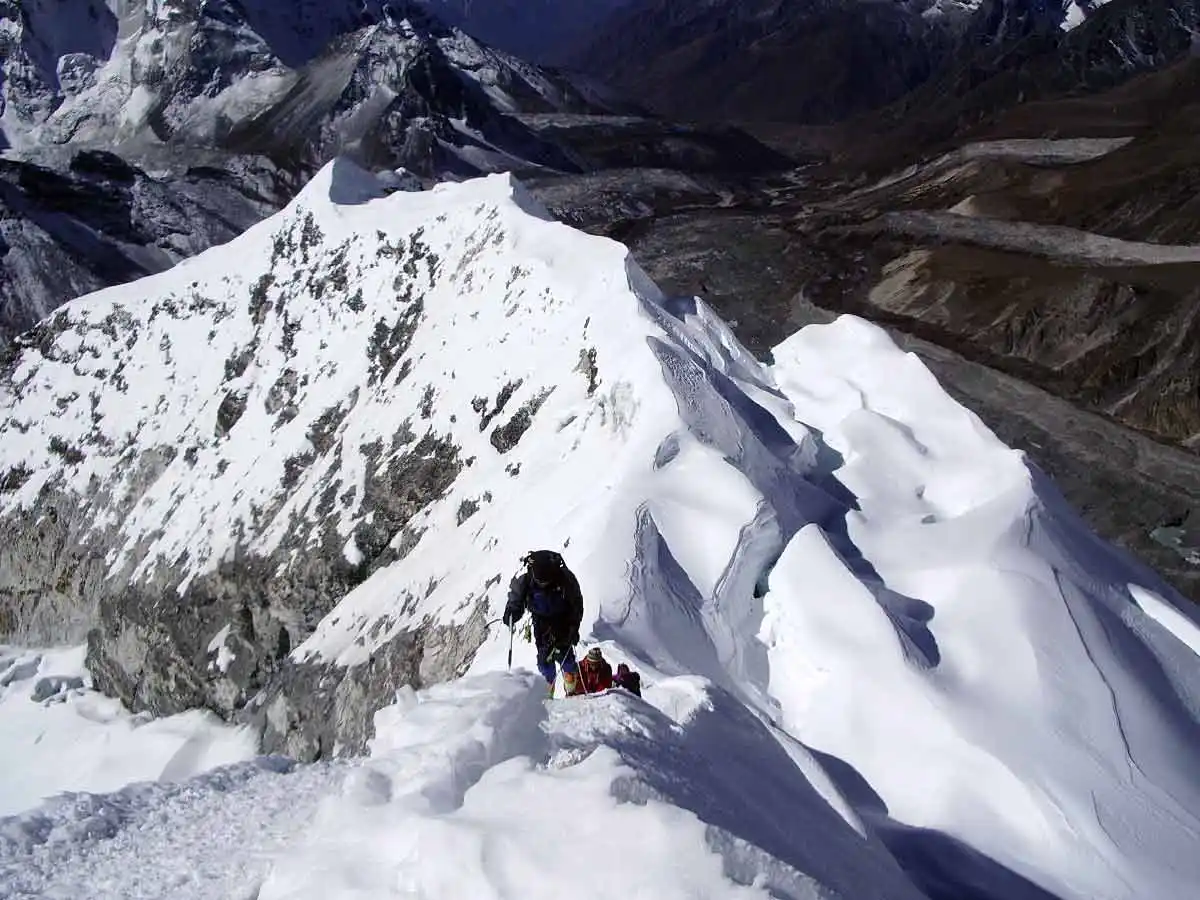
Island Peak is considered a moderately challenging trekking peak and is an excellent choice for climbers with good physical fitness and a strong sense of adventure. While many people often recommend it as a beginner's Himalayan climbing peak, climbers still need proper acclimatization and basic mountaineering skills to reach the summit. The climb involves walking on glaciers, crossing crevasses with fixed ropes, and ascending steep snow and ice slopes using equipment such as crampons, an ice axe, a harness, a helmet, and a Jumar (ascender). Although the technical sections are manageable, the high altitude makes the climb physically demanding. Previous trekking experience above 4,000–5,000 meters is highly recommended, and experienced guides provide basic climbing training before the summit push to help climbers climb safely and confidently.
Island Peak Climbing Route
Island Peak climbing begins with a scenic flight from Kathmandu to Lukla and a trek through the famous Everest region. On the way you will pass through beautiful Sherpa villages such as Namche Bazaar, Tengboche, Dingboche, and Chhukung, giving you plenty of time to acclimatize while enjoying stunning Himalayan scenery. From Chhukung, the trail continues to Island Peak Base Camp, where many climbers set up a high camp before their summit attempt. The ascent, generally before dawn, uses rocky paths, glaciers, and crevasses, then steep snow slopes, aided by fixed ropes, to the narrow summit ridge. The final push is hard work, but the reward is a view you will never forget of Mount Everest, Lhotse, Nuptse, Ama Dablam, Makalu, Baruntse, and the surrounding glaciers. Island Peak climbing is often combined with the Everest Base Camp Trek to make one of the most rewarding trekking and climbing adventures in Nepal.
Why Choose Island Peak Climbing?
Island Peak is one of the best climbing adventures in Nepal for anyone who wants to experience real Himalayan mountaineering without taking on a major expedition peak. It offers the perfect mix of scenic trekking, glacier travel, basic technical climbing, and rich Sherpa culture, making it an ideal choice for adventurous trekkers and first-time climbers. Along the journey, you'll visit traditional Sherpa villages and ancient Buddhist monasteries and enjoy breathtaking views of some of the world's highest mountains before standing on a spectacular 6,189-meter summit. Island Peak is also an excellent training peak for climbers planning future expeditions to Lobuche East, Mera Peak, Ama Dablam, Makalu, or Mount Everest, helping build valuable skills and confidence for bigger Himalayan challenges.
Why Choose Ethic Himalaya for Island Peak Climbing?
Your safety, comfort, and success are our top priority at Ethic Himalaya. We are proud to have an experienced team of government-licensed climbing guides and a highly skilled Sherpa team offering professional support on your expedition from your arrival in Kathmandu to your safe, successful summit and return. We plan each itinerary carefully with proper acclimatization, provide high-quality climbing and camping equipment, and ensure reliable logistics, comfortable accommodation, and nutritious meals. Small group sizes mean you’ll receive individual attention and expert guidance throughout the climb. We also stress safety, emergency preparedness, fair pricing with no hidden costs, and responsible tourism that supports local communities and protects the Himalayan environment. With Ethic Himalaya, you don't just join an expedition; you join a dedicated team who are committed to making your Island Peak adventure safe, enjoyable, and unforgettable.